Learn more about
Gainesville Aviation Accident Attorney
What Causes Airplane and Aviation Accidents?
There is rarely just one explanation for an aviation accident. Some incidents result from a single preventable mistake, while others involve several contributing factors. Identifying the cause is important because it helps determine whether negligence, defective equipment, or another form of wrongdoing played a role. Some of the circumstances that may contribute to aviation accidents include:
Pilot Error and Negligence: Pilots have important responsibilities involving aircraft operation, weather conditions, communication, and passenger safety. Errors involving navigation, judgment, aircraft handling, or failure to follow established procedures may contribute to an accident.
Mechanical Failures: Aircraft rely on numerous mechanical and electronic systems to operate safely. Engine problems, control system failures, landing gear malfunctions, and other equipment issues can create dangerous situations, particularly when problems are not identified or addressed properly.
Inadequate Aircraft Maintenance: Aircraft owners, operators, and maintenance providers may have responsibilities involving inspections, repairs, and maintenance records. Failure to properly maintain an aircraft may increase the risk of a serious incident.
Weather-Related Issues: Severe storms, poor visibility, turbulence, icing, and changing wind conditions can create challenging flying conditions. Questions may arise when an aircraft is operated despite weather conditions that make a flight unsafe.
Air Traffic Control Errors: Aviation safety depends on communication and coordination between pilots and air traffic controllers. Certain communication failures, routing issues, or clearance errors may contribute to collisions or other dangerous situations.
Defective Aircraft Components: A faulty engine component, defective instrument, malfunctioning control system, or other dangerous product may contribute to an aviation accident. Depending on the circumstances, manufacturers and other companies involved in the product's distribution may face liability.
Understanding what caused an aviation accident requires more than simply knowing that an aircraft crashed. A careful review of the available evidence is often necessary to determine whether someone failed to meet their legal responsibilities.
What Types of Aviation Accidents Can Lead to a Personal Injury Claim?
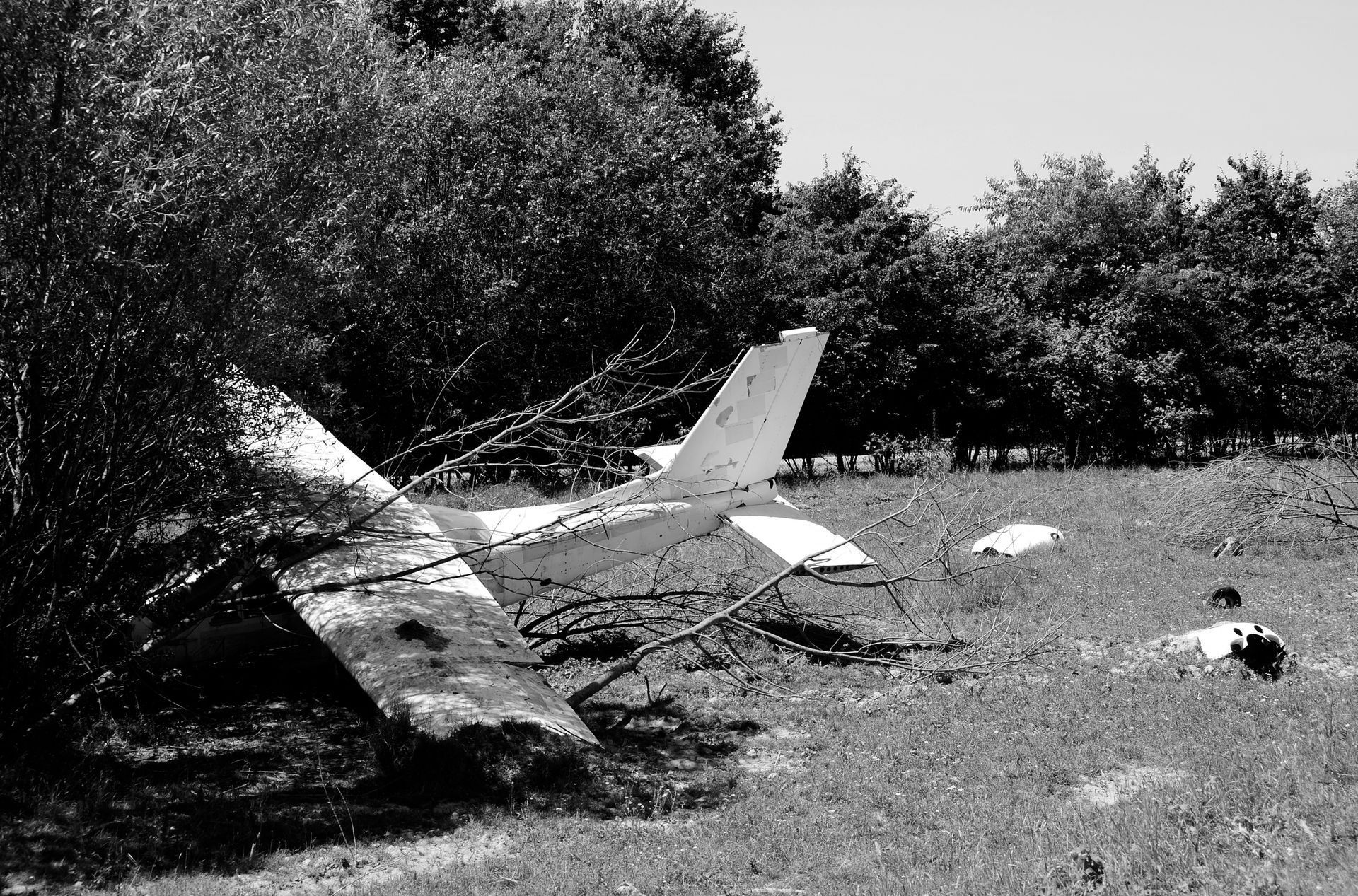
Aviation accidents can happen in several different environments, and the type of aircraft involved may influence the legal questions surrounding an injury. For example, a private airplane crash may raise questions about pilot qualifications, aircraft ownership, maintenance, and flight conditions. A helicopter accident may involve mechanical problems, operational decisions, or issues related to the location where the aircraft was being operated.
Other aviation-related incidents may include:
- Commercial airplane crashes involving passenger aircraft.
- Private and recreational aircraft accidents.
- Helicopter crashes during transportation or commercial operations.
- Agricultural aircraft accidents involving crop-dusting operations.
- Charter flight and air taxi accidents.
- Aircraft runway and taxiway collisions.
- Midair collisions involving two or more aircraft.
- Accidents during takeoff, landing, or flight.
- Ground accidents involving aircraft maintenance or airport operations.
Not every aviation incident automatically creates a personal injury claim. However, when an accident results from another party's negligence or a defective product, injured individuals may have legal grounds to pursue compensation.
Who Can Be Held Responsible for an Aviation Accident?
One of the most common questions after an aircraft accident is who can be held legally responsible. Unlike some motor vehicle collisions, aviation accidents may involve several different parties, each with separate responsibilities.
Depending on the circumstances, potentially responsible parties may include:
- Pilots: A pilot may be responsible when negligent operation, improper decision-making, or failure to follow applicable safety requirements contributes to an accident.
- Aircraft Owners and Operators: Companies or individuals responsible for an aircraft may face liability when their negligence contributes to unsafe operations.
- Maintenance Companies: A maintenance provider may be responsible when improper repairs, overlooked problems, or inadequate inspections contribute to an aircraft failure.
- Aircraft Manufacturers: Manufacturers may face product liability claims involving defective designs, manufacturing defects, or inadequate warnings.
- Parts Manufacturers and Suppliers: Companies responsible for aircraft components may be involved when a defective part contributes to an accident.
- Other Aviation Service Providers: Depending on the circumstances, additional parties involved in airport operations, flight coordination, or aviation services may need to be considered.
It is also possible for multiple parties to share responsibility. For example, an aircraft accident could involve both a mechanical failure and inadequate maintenance. Determining how those circumstances contributed to the incident is an important part of evaluating a potential claim.
What Should You Do After an Aviation Accident?
Following an aviation accident, the immediate priority should always be medical care and personal safety. Some injuries may be obvious, while others may not become apparent until hours or days after the incident. If you survive an aviation accident, or if a loved one is injured, several steps may help protect your health and preserve important information.
Get Medical Attention
Seek medical evaluation as soon as possible. Aviation accidents can cause traumatic brain injuries, spinal injuries, internal bleeding, fractures, burns, and other serious conditions. Prompt medical attention is important even if symptoms initially seem manageable.
Preserve Available Information
Keep any documents related to the flight, including tickets, passenger information, communications, and medical records. If photographs or other information about the incident are available, preserve them.
Avoid Speculating About the Cause
Aviation accident investigations can take time. Avoid making assumptions about who caused the accident before the relevant evidence has been reviewed.
Be Careful With Insurance Communications
Insurance representatives may contact injured passengers or family members to discuss the incident. Before agreeing to a settlement or providing extensive statements, consider speaking with an attorney about your rights.
Understand Your Legal Options
Aviation accident claims can involve complex legal issues, particularly when multiple companies or federal regulations are involved. Speaking with an experienced litigation attorney may help you understand what steps are appropriate.
What Injuries Are Common in Aviation Accidents?
The severity of aviation accident injuries depends on the circumstances of the incident, the aircraft involved, and the forces experienced during the accident. Survivors may face injuries that require months or years of medical care. Some of the most serious injuries associated with aviation accidents include traumatic brain injuries, spinal cord damage, severe burns, multiple fractures, internal organ damage, amputations, and extensive soft tissue injuries.
A traumatic brain injury, for example, may affect memory, concentration, emotional regulation, and the ability to perform everyday activities. Spinal cord injuries may result in partial or complete paralysis. Severe burns may require multiple surgeries, skin grafts, and long-term rehabilitation. Even when a person survives an aviation accident without immediately apparent catastrophic injuries, the emotional impact can be significant. Survivors may experience anxiety, sleep disturbances, emotional distress, and difficulty returning to normal activities.
The long-term consequences of an aviation accident should be considered when evaluating a personal injury claim. A settlement that only accounts for initial medical treatment may fail to recognize the continuing needs of someone who has suffered permanent injuries.
Frequently Asked Questions
Do I need a lawyer for an aviation accident?
Yes. Aviation cases are highly complex, involving federal laws and powerful defendants. An aviation accident attorney can protect your rights and maximize your compensation. Contact us today to learn more.
Who can be held liable in an aviation accident?
Pilots, airlines, manufacturers, maintenance providers, or air traffic controllers may be liable. Our dedicated team at David K. Wilson & Associates will investigate and determine all responsible parties.
How long do I have to file a personal injury claim after an aviation accident in Texas?
In Texas, the statute of limitations is two years from the date of the accident. However, there are exceptions, so it's crucial to speak with an attorney as soon as possible to preserve your rights.
Learn More
Contact Us
Free Case Evaluation
Aviation Accident Advocates in Gainesville, Texas
At David K. Wilson & Associates, we provide compassionate, experienced legal support for those who have been harmed or lost loved ones in plane crashes, helicopter accidents, or other aviation-related tragedies. We're here to help you seek accountability and justice, reach out today.
Please call the team at David K. Wilson & Associates at (903) 870-9050 for a free legal consultation with an aviation accident attorney.